NEW Feldenhorse PROGRAMME WITH CATHERINE MCCRUM Starts 17 July 2026
RITTER DRESSAGE PRESENTS
FELDENHORSE
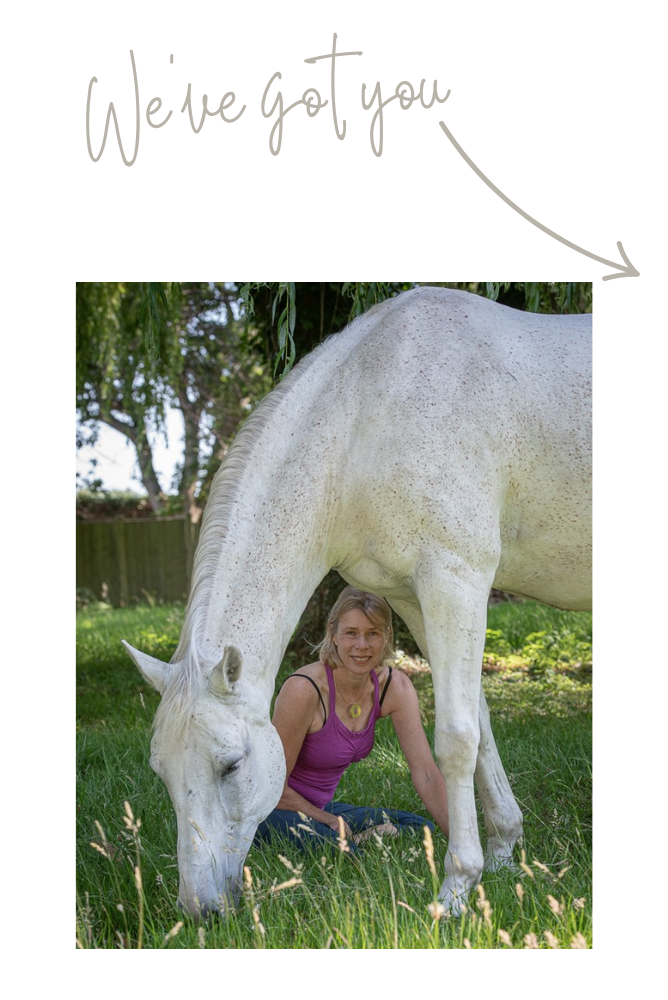
A NEW PROGRAMME WITH CATHERINE MCCRUM AND CHARLOTTE ZETTERBERG
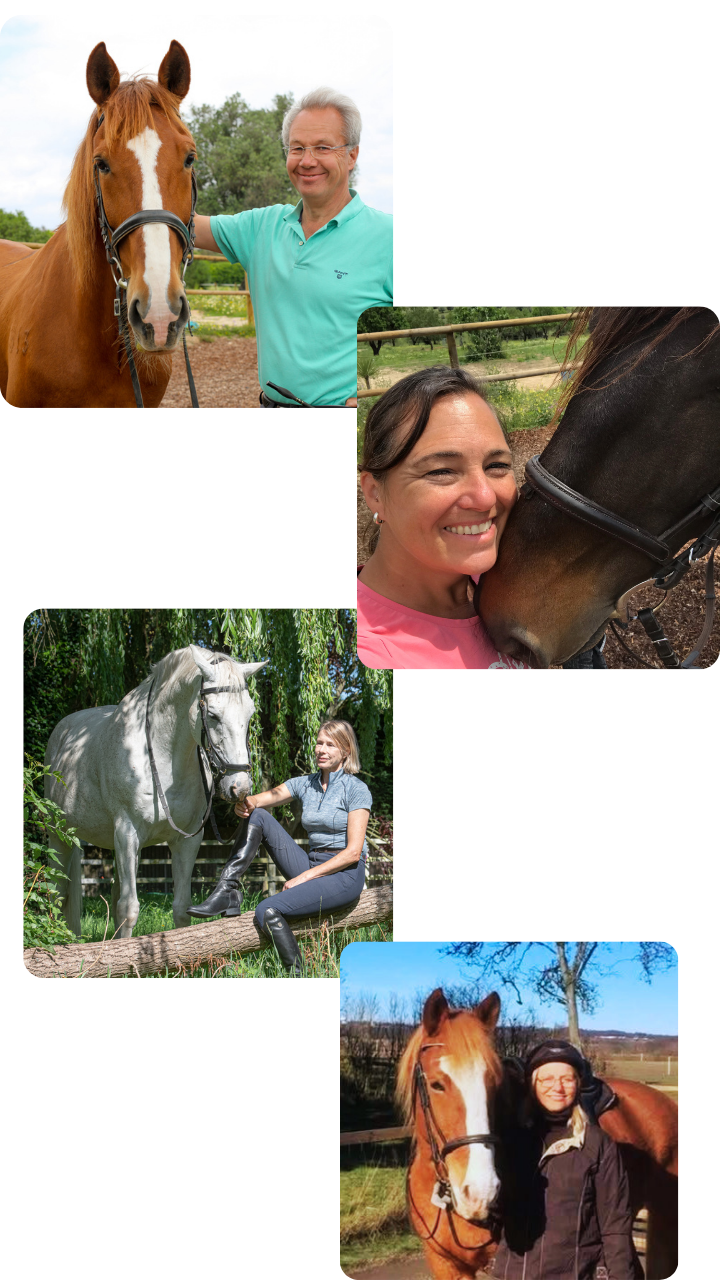
Ritter Dressage is the online home of Thomas and Shana Ritter, where riders from around the world learn to train their horses in the classical tradition - with clear theory, thoughtful gymnastic work, and the horse's wellbeing at the centre of everything they do.
Catherine and Charlotte have been a part of the Ritter Dressage team for several years, teaching riders to move better through their Feldenkrais-based movement lessons. FeldenHorse grew out of that collaboration.
It began with Catherine's horse, QQ, and the idea that her hands-on Feldenkrais skills might do what her riding, at that point, could not.
FeldenHorse - hands on Feldenkrais work for Horses
You understand the theory of classical training. The execution is where it falls apart.
FeldenHorse gives you another way in - from the ground, through your hands"
FeldenHorse is a 16-week introductory course to using the Feldenkrais Method with your horse. Deepen your understanding of the 6 essential dressage movements your horse needs to move well. Learn to use your hands to listen, redirect, and improve these movements from the ground up.
HOW IT BEGAN!
The FeldenHorse story . . . from our very own Catherine McCrum
FeldenHorse started to come to life in the moment I realised...
“When Thomas is talking about the aids of his legs, sitting bones, and the intelligent use of his hands on the reins, he is really describing a hands-on Feldenkrais Functional Integration lesson - except he is using his whole body rather than just his hands.”
Catherine McCrum, Feldenkrais Practitioner
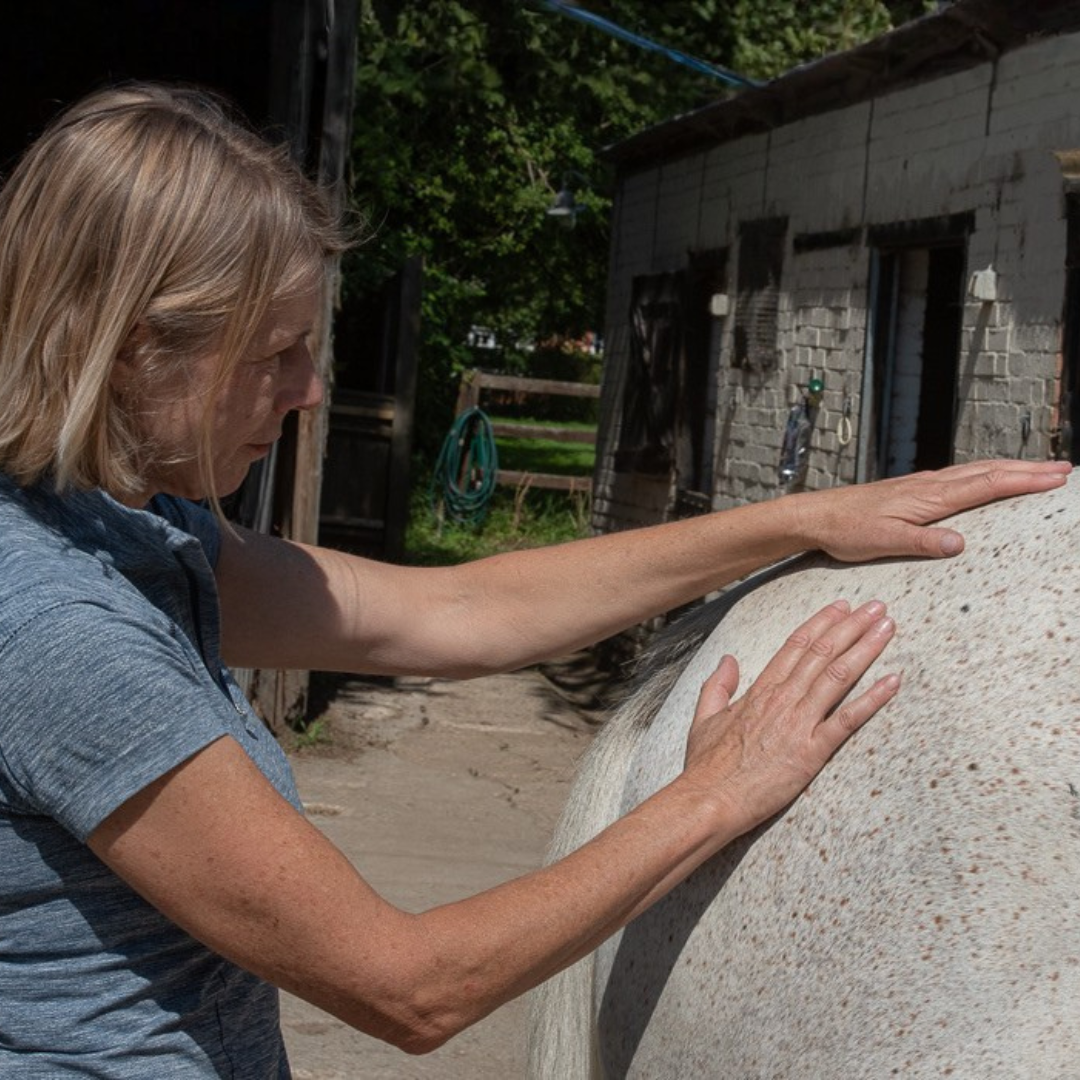
The moment Thomas’s words clicked, I wasn't in the saddle. I was standing beside my horse, QQ, with my hands on him, experimenting with what I'd just heard Thomas Ritter describe.
As I listened to him explain where he applied his aids and what response he was feeling for, I started to trace out the same thing with my hands.
Although I was on the ground not in the saddle, QQ responded exactly as Thomas had suggested he would. He softened his ribs under my hands, shifted his weight in exactly the way I was aiming for, and a beautiful lateral curve appeared through his whole spine.
Before that moment, it had never occurred to me that the skills I'd spent years developing as a Feldenkrais practitioner could become a way in to teaching my horse the coordinations that form the foundation of Thomas’s 6 essential dressage movements - the ability to move forward, halt, turn the shoulders, bend, sidestep, and reinback with balance and ease.
Yet suddenly, on that day, Thomas’s framework for training wasn't theory anymore. There it was - I could feel the essential of 'bend' emerging under my hands.
Let me back up a little though and tell you a bit more about how I got to this point...
and how hands-on work enabled me to bridge the gap between knowing and doing
I'd returned to horses after many years away and quickly found myself in trouble after taking on my horse, QQ, who was unbalanced, did not particularly enjoy being ridden and was utterly adept at blocking any attempt I made to change this.
As a skier and keen sportswoman, I had improved my athletic skills through the Feldenkrais Method far beyond what I had imagined was possible - I was running faster, jumping higher, skiing better than ever, and my chronic injuries magically disappeared. And all with a feeling of less effort.
My dream with QQ was to repeat this experience and reach our full movement potential together.
Although I sought out help from various instructors, after a series of frustrating experiences, I realised that much of what I was being taught constrained and constricted us both and only served to increase QQ's unhappiness in the school. I was at a loss. Then I came across Thomas and Shana Ritter and their intelligent and sympathetic approach to training horses. Ritter Dressage sounded philosophically and practically very much like the Feldenkrais Method - but for horses. As I researched their teaching further, I felt they could help me train in the way I had dreamt of and I was sure I could help their students to improve their movement skills in the saddle. I offered my services and luckily they loved the idea of us working together.
I started to support their students with Feldenkrais based lessons for their seat and through The Aware Rider programme. Meanwhile, the Ritter's teaching and generous support led to me making huge gains in my understanding of the What, Why, and How of training my horse.
But I still felt that I struggled to ride well enough to help QQ enjoy carrying his rider. And of the 6 essentials, only halt made a regular appearance!
Feeling disheartened, I started to think laterally.
What did I already know how to do?
What could I bring to this that wasn't about becoming a better rider in the conventional sense?
I knew I could teach riders to improve their balance, posture and co-ordination in the saddle through Awareness Through Movement lessons.
But... I also had another area of expertise: my hands-on Feldenkrais work (Functional Integration).
In these sessions, through my hands, I explore a person's habitual movement patterns - specifically the ways they unconsciously tighten and brace - and guide them out of stiffness and discomfort towards more pleasurable and functional ways of moving.
What if QQ could learn from my hands just as easily as my students?
That was the moment I realised:
“When Thomas is talking about how to ride the 6 essentials with the aids of his legs, sitting bones, and the intelligent use of his hands on the reins, he is really describing a hands-on Feldenkrais Functional Integration lesson - except he is using his whole body rather than just his hands.”
Applying Feldenkrais Functional Integration to Horses
Functional Integration is a two-way conversation through touch about how a person might be obstructing their innate ability to move well. My aim is to give them an experience of what it’s like to feel coordinated, balanced and free from habitual tension and stiffness.
I thought I would be able to take the skills I’d learned from many years of practising Functional Integration and apply them straight away to QQ.
However, although people tend to be quite happy to co-operate and engage with this two-way process, QQ, despite my initial success, quickly decided that one or two of these “conversations” was quite enough - and made his feelings known.
There was a lot of walking off, quite a few warning nips, and plenty of shifting and turning away from me. I soon realised that QQ's tolerance for touch was much lower than most of my human students and, unlike people, who can appreciate that something might benefit them in the future, he was far more interested in doing his own thing than hanging around while I experimented.
This was valuable but disconcerting information.
My students will forgive a clumsy moment, or some inattention on my part, but horses give you instant and clear feedback. If your movements are not congruent with the directions you're exploring, and if your intention is muddled in any way, they will let you know - often by stiffening or wanting to leave. In addition, I realised that, in my desire to help QQ, I had fallen into the trap of wanting to shape and change him into how I thought he should move, and he expressly did not like that.
I started to think less like a bodyworker who wants to treat and bring about change and more like a martial artist whose goal is, first and foremost, remaining calm, centred and blending with movements rather than meeting force with force.
A quality of touch that transforms
My first teacher, Scott Clark, describes the quality of touch we're looking for in hands-on work as akin to martial arts:
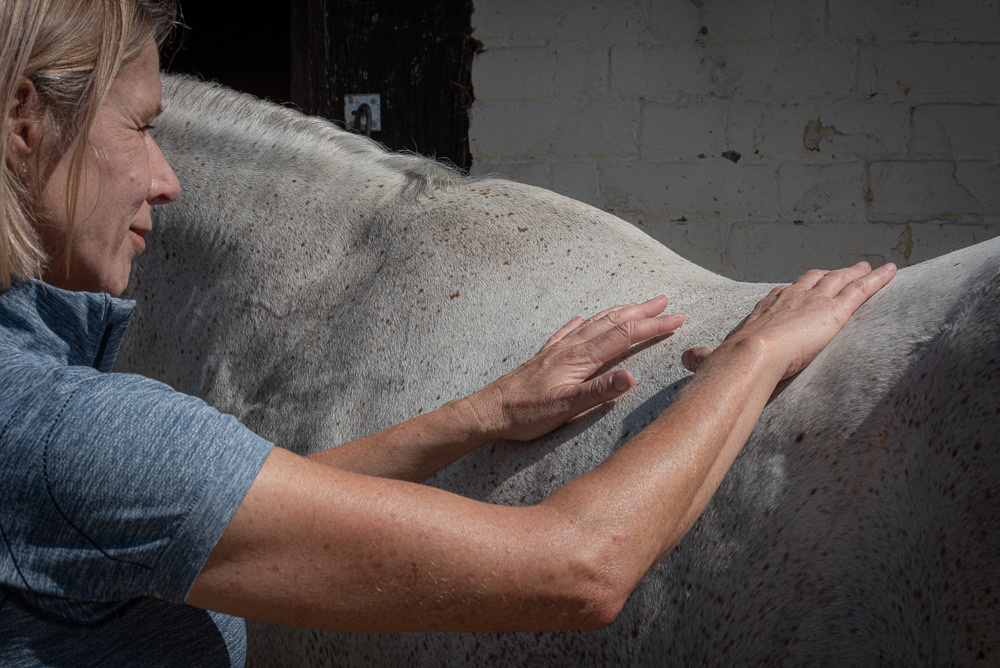
"We often think that the forces of pain and discomfort in our bodies require equally strong forces to oppose them. But Feldenkrais, like Aikido, sidesteps the negative forces, blends with them, redirects them. The way I touch you starts by agreeing with you rather than opposing, then redirects your own power into directions that can be useful and effective."
With this in mind I resolved to become much more observant of how receptive to my touch QQ was on any given day and in any given moment. Were we in agreement, or was I getting pushy?
What QQ Taught Me...
After some trial and many errors, I learned how to converse better with QQ. I discovered there were places he was happy for me to touch, places that were no-go zones, and places where he was ambivalent.
I allowed myself to be guided by the responses he gave me on any given day - tuning into my senses for feedback and putting aside my desire to get him to do something.
In this way, I was able to find more and more movement possibilities.
Often these felt like, "Oh, so that's what he's been missing." From there, I was able to bypass his defensive muscular contractions further and establish new movement pathways that felt connected, fluid and relevant to his training.
And the proof of that was that his chronically contracted right side lengthened and freed up and he could finally bend and turn more equally in any direction.
The FeldenHorse Method Emerges
Through my conversations with QQ, I had unintentionally started to develop a methodology of hands-on work based around Thomas's 6 essential dressage movements for horses. One that felt like something really worth sharing with riders who were in the same position I had been. Riders who could see what essential movements their horse was missing, but couldn't find a way to make them happen.
Working alongside my fellow Feldenkrais Practitioner, mindfulness teacher, and riding instructor Charlotte Zetterberg, we introduced FeldenHorse sessions to students in some of the Ritter courses.
The FeldenHorse Effect - What the Students Discovered
Bringing this experience to other horse owners made a real difference to :
- Their understanding of the skeletal relationships that underpin good balance
- Identifying the faulty movement patterns which interfered with the 6 essentials when riding
- The quality of their communication with their horses
- The health and happiness of their horses and their willingness to train and be ridden.
The feedback was overwhelmingly positive.
People loved these short movement sessions. They felt able to do something their horses enjoyed - something that made a visible difference to balance, posture, and quality of movement.
The sessions improved their understanding of the relationship between different parts of their horse in movement.
- Working with the vertebrae of the spine to move in all possible directions improved the capacity to weight-shift around all four legs which helped each of the 6 essential movements.
- A pelvic clock organised from the sitting bones helped the diagonal connections between hind leg and opposite front leg become more symmetrical - which facilitated effortless transitions..
- The hands-on work revealed previously hidden gateways into their horse's body - which translated into greater precision with their seat and legs in the saddle.
Charlotte and I were genuinely surprised and delighted at how effective students found it.
Introducing the Feldenhorse Course
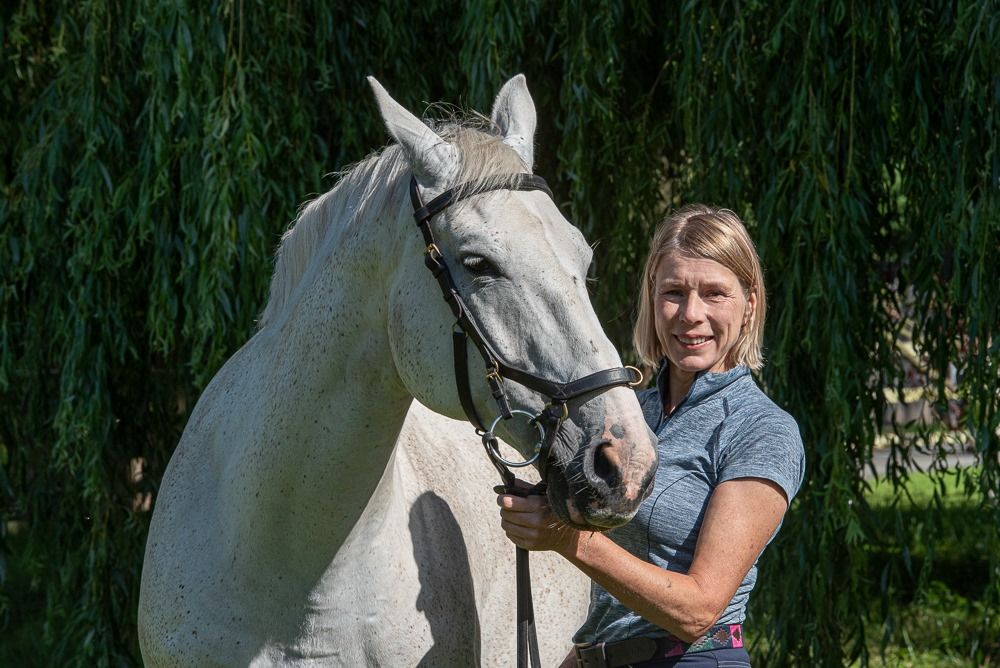
Through FeldenHorse you will deepen your understanding of how your horse moves and learn to use your hands to listen, redirect and improve that movement from the ground up.
The FeldenHorse Course is a fully supported introduction to using the Feldenkrais Method with your horse.
This online course includes 8 Modules run over 16 weeks - starting july 17
Presented by Catherine McCrum and Charlotte Zetterberg.
With contributions and support from Thomas Ritter, Shana Ritter and Yvonne Lübcke.
This is a brand new programme about learning to hold a conversation about movement with your horse - through touch, through observation, through the quality of your attention.
Learning to do this hands-on Feldenkrais work is as much a developmental process for you as it is for your horse.
- Developing your capacity for relational dialogue so that you can be present and attentive to yourself and your horse.
- Developing the co-ordination behind good quality touch that allows you to converse with your hands.
- Developing in your horse Thomas's six essential movements for beautiful balance and harmony in their ridden work.
- Developing confidence, relaxation and a feeling of well-being in your horse.
Because of the nature of this process the programme comes with a high degree of support and personalised feedback from Catherine McCrum, Charlotte Zetterberg and their special guest Yvonne Lübcke.
What's Included?
We have structured the course so that the content simultaneously develops you as a FeldenHorse practitioner and develops your horses movement potential.
This practical programme is centred around using hands-on work, observation and understanding to develop six essential movements in your horse - forward, halt, turning the shoulders, bending, side stepping/lateral movements and rein back .
To practise this work effectively we also develop your feel and awareness as a practitioner AND integrate six foundational movements for you.
This work asks more of the practitioner than it might appear. The quality of what your horse receives depends entirely on the quality of your attention, your coordination, and your willingness to set aside expectation and follow what is actually happening. The training and support built into this course exists to reflect that.
As well as the private support community, each module includes a live Feedback Session with Catherine. These sessions are your opportunity to get personalised feedback from Catherine by submitting a short video of your hands-on work with your horse. There is also so much to learn from the experiences of your peers with their horses too. Questions and discussion are welcome. Guest instructors join Catherine throughout.
You'll learn:
- Hands-on sequences that trace out each of the essential movements in your horse's body
- How to read your horse's responses and adjust accordingly
- How your own organisation, your groundedness, your co-ordination, the quality of your contact shapes what your horse receives
- The connection between what you discover with your hands and what becomes available in the saddle
The course will be fully supported with:-
- Video and Audio for all Feldenkrais and FeldenHorse lessons
- Demo videos with commentary of the 6 Dressage Essentials in action
- Live Feedback Sessions with Catherine and the team - bring your videos, your questions, and your observations.
- A private members community.
- Recordings of all live sessions available in the course portal if you cannot attend live
- Full, lifetime access to all recordings, course materials, and the community beyond the 16 weeks of the programme.
The aim is not simply that you will know more, or your horse move better, but that you will perceive and work with your horse differently.
Programme Price = €497
*Other Currencies and Payment Plans Available.

Module by Module
01.
Introducing FeldenHorse
FeldenHorse isn't just bodywork or manual treatment for horses. It's a holistic approach to working with your hands to bring about a transformation in the quality and expression of your horse's movement.
Your own quality of movement is probably the most important component of effective hands-on work. In this module you will start with a simple awareness exercise for your hands that prepares you to touch your horse with sensitivity and intelligence. We will introduce some simple FeldenHorse hands-on techniques for your horse and guide you what to look out for in terms of their availability for the work. We will discuss the theory behind The 6 Essential Movements for training. You can also watch how theory becomes practice through Yvonne's presentation of riding the Figure of 8 exercise. You will also have the option to film yourself riding the Figure of 8 as a 'before' example of your work.
Walk away with:
- the essential physical foundations for a sensitive touch
- intelligent hands your horse enjoys listening to
- an initial understanding of how the essentials apply in a live ridden session
- a better understanding of Thomas's theory behind The 6 Dressage Essentials and how they relate to FeldenHorse
- an option to video yourself riding the Figure of 8, or in-hand, as a 'before' example of your work
02.
The First Essential: Forward
When forces are cleanly and clearly transmitted from the hind legs through the spine to the head and neck the components of forward - up transitions, lengthening the stride, pushing and extending - become effortless.
In this module you will learn to feel transmission of forces through your own body from foot to head. Then you're ready to experiment with sensing how forces travel from your horses hind end to their front legs with the FeldenHorse sessions. You will also test the extension of the hind legs. All this is supported with theory as well as an in-hand session with Yvonne in which she breaks down step by step the moments where her horse loses balance her forward motion is impeded.
Walk away with:
- an experiential sense of how forces travel through your horse - and you - and why that matters for forwards motion
- how asymmetries in the extension of each hind leg influence forward movement
- how losses of balance can interrupt forward movement in an in hand session
- feedback on your first attempts at FeldenHorse hands-on work
03.
The Second Essential: Halt
Coming to a halt and making down transitions require your horse to have the ability to shorten the stride and carry themselves in a more collected frame by lifting the spine and flexing the hind limbs.
In this module you will experiment with how to lift your own sternum and withers on all 4's to rock your weight backwards. You will then apply these principles to your horse with hands-on work. You will learn how lifting the sternum and withers frees up the front legs to flex more evenly through all the joints. These experiential practices will be supported by Yvonne showing how she uses small weight shifts to each leg to refine the balance needed for a clean halt in the Figure of 8 exercise. A live discussion gives you the opportunity to share your work with us.
Walk away with:
- how the organisation of your own chest and spine influences the directions you can shift weight to which leads to a more symmetrical self-use
- how the biases in your horse's weight shift from front to back relate to their ability to lift their back and free up their limbs for expressive movement
- how small weight shifts to each of the horse's legs in in-hand work can re-organise the horse's self carriage and balance
- an understanding of how this applies to you and your horse with live discussion on the theory and practice of the second essential
04.
The Third Essential: Turning the Shoulders
Riding Corners as in Squares and Diamonds and Turn on the Haunches all require the horse to be able to turn their shoulders equally easily to the left and to the right.
In this module we will explore how the flexibility of the chest and the differentiation of the thoracic spine and ribs determine how easily the shoulders turn. You will discover how your own lateral flexibility connects to finding ease in your shoulders. With an experiential understanding of how the chest connects the shoulders to the pelvis, you will experiment with the relationship between the shoulder blades and the ribs with hands-on work with your horse. Charlotte will show you how to lengthen the outside of your horse. And Yvonne will explore how to influence your horse's lateral balance in halt with side stepping and full pass. All of this backed up with theory and live feedback for you.
Walk away with:
- a flexible chest that can bend equally easily right and left so you can work more evenly with your hands.
- a sensory understanding of how your horse's rib cage influences the ability of your horse to turn their shoulders in each direction
- how to use small side steps, or full pass to rebalance your horse within an exercise like Figure of 8
- detailed feedback on your examples of hands-on work with your horse with the team
05.
The Fourth Essential: Bending
Bending is inseparable from turning the shoulders with ease. If you want to ride a balanced circle on both reins, then advance to movements like Shoulder-in, Travers and Renvers, you and your horse need to be able to turn the shoulders AND establish a good quality bend from head to tail.
In the Awareness Through Movement lesson, we will use our arms as a vehicle to shorten and lengthen our two sides from the arms and shoulders right through to the pelvis. The FeldenHorse lessons build on your understanding of the relationships between your horse's pelvis, ribs, and head and neck in lateral flexion. We will also explore how internal and external rotation of the horse's front legs influences their lateral balance. Yvonne shows how as the two sides equalise, the horse is more available to trot the Figure of 8. We finish the module with our live meeting.
Walk away with:
- an understanding of how patterns of tension in your shoulders and arms influence the symmetry of your torso
- how the evenness of your horse's bend is dependent on the distribution of lateral flexion between the pelvis, chest, head and neck
- how improving the bend improves the horse's balance in all 3 planes so they are able to perform exercises in a higher gait with ease
- feedback on your organisation while you work and a deeper understanding of the theories behind the practices
06.
The Fifth Essential: Side Stepping - Lateral Movements
Side stepping movements such as leg yield, or half pass, require all the components of the third and fourth essentials as well as the ability of all four limbs to adduct and abduct towards and away from the midline in a co-ordinated fashion.
The Feldenkrais lesson in this module plays with internal and external rotation of the femurs to differentiate the hip joints. Your horse has a smaller range of motion in their hip joints, but is likely to have more potential for differentiation than is available presently. The FeldenHorse lessons are a proprioceptive guide to this, as well as exploring how tension in the saddle area can inhibit the freedom of side stepping movements. Yvonne will show you the meridian lines of your horse and how you can help them release long held physical and emotional tension. We will have a live meeting as always to explore this work further.
Walk away with:
- free hip joints that will improve your agility and responsiveness in life
- a sensory understanding of how your horse restricts the range of movement in their limbs and how you can help them feel safe enough to free up their innate potential for free movement
- an introduction to energy work through working with the meridian lines of your horse
- a deeper understanding of how theory and practice comes together in your work
07.
The Sixth Essential: Reinback
Reinback asks for more flexion of the hind limbs, a greater degree of co-ordination, and an ability to flex and carry through the length of the spine. If the horse cannot rock their weight diagonally from a front leg to the opposite hind, then the reinback will be crooked and only serve to strengthen their dysfunctional movement patterns.
The Awareness Through Movement lessons clarify where forces can get trapped through oscillatory movements that send forces through the skeleton from foot to head and head to foot. Oscillations are great for helping us feel where we are blocking the free flow of movement - any kinks, bends, or twists will block the flow and result in an uneven gait. The FeldenHorse goes into the finer details into finding balance and freedom in the head and neck and how that impacts the whole of your horse. Charlotte demonstrates how hind leg flexions can improve the quality of the reinback. Yvonne demonstrates the reinback. We will hold our regular live meeting to explore what has come up in the work for you.
Walk away with:
- a refined sense of how oscillations rebalance you so that forces can travel through the entirety of your skeleton with ease
- how the biases of the head, neck, poll and throat latch influence the quality of the reinback
- an understanding of reinback on the ground and in the saddle
- how the hands-on work can be integrated into your training with your horse through live discussion
08.
Wrapping Up: Before and After
In this last module you will have an opportunity to share with Thomas, Shana and the FeldenHorse team where you are after these weeks of theory, FeldenHorse work and practice.
In this wrap up session you are welcome to share;-
- a video of you either riding the Figure of 8, or working in-hand with your horse
- you are also free simply to share with us the impact of the course on you, how it's affected your work with your horse, and how you might continue your work together in the future.
This module Yvonne also gives you a Birds Eye view of her riding the Figure of 8 from the saddle. So you can get a feel for her experience and how she approaches the exercise in real time.
Walk away with:
- confirmation of your learning and understanding of the theories and practices in this course
- validation of your work through the feedback of the team
- how you might integrate the FeldenHorse into your training further
- ideas of how you might progress and continue your learning after the course finishes
The FeldenHorse Course
A fully supported introduction to learning how to practise the Feldenkrais Method with your horse.
If you have ever struggled with your timing, balance, aids and bringing riding theory into reality - this is for you!
No prior experience with hands on work is needed - and there is no requirement to be able to ride high level dressage movements. We are going to be creating them from the ground, gently, thoughtfully and in collaboration with your horse.
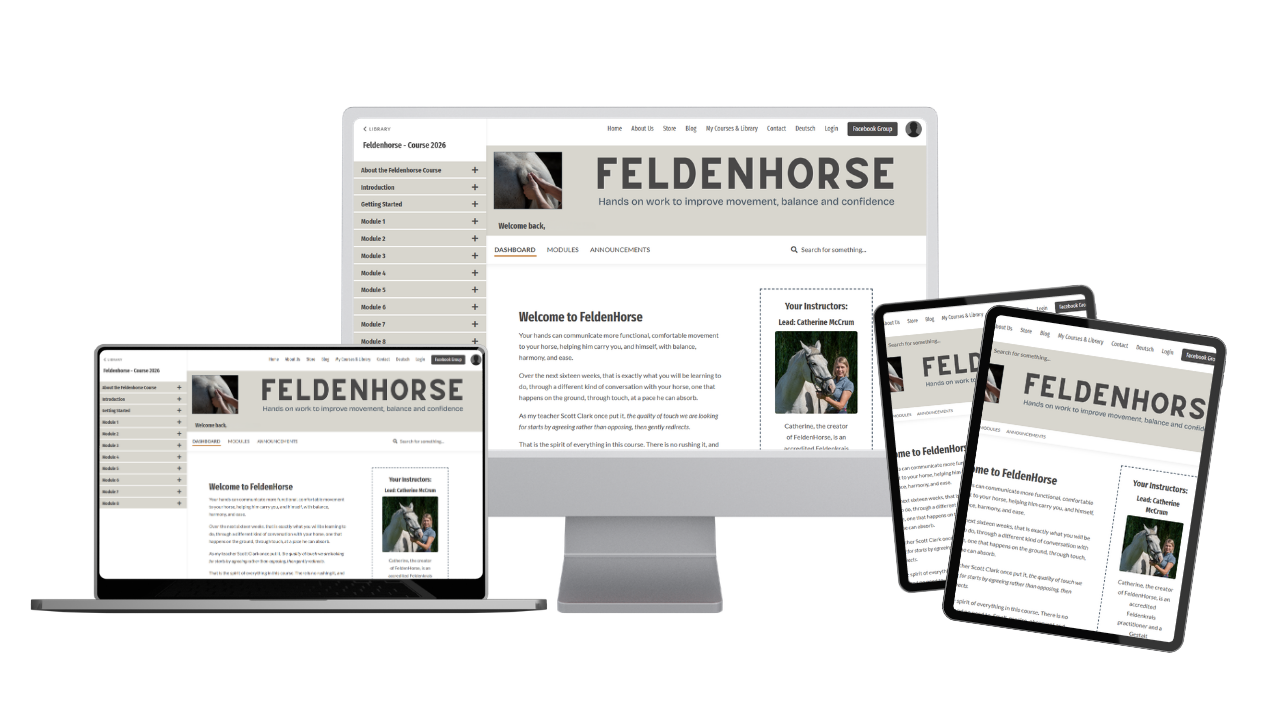
- 8 Modules
- Targeted FeldenHorse lessons with video demos for your horse
- Feldenkrais Awareness Through Movement lessons for you as the practitioner
- Riding and in-hand demos to help you understand The Dressage Essentials
- Support through live group feedback sessions and the private community
- Life Time access to the Course Materials
The course starts July 17th 2026.
Will you be joining us?
Payment Plans and Currency options are available at checkout.
Meet Your Instructors
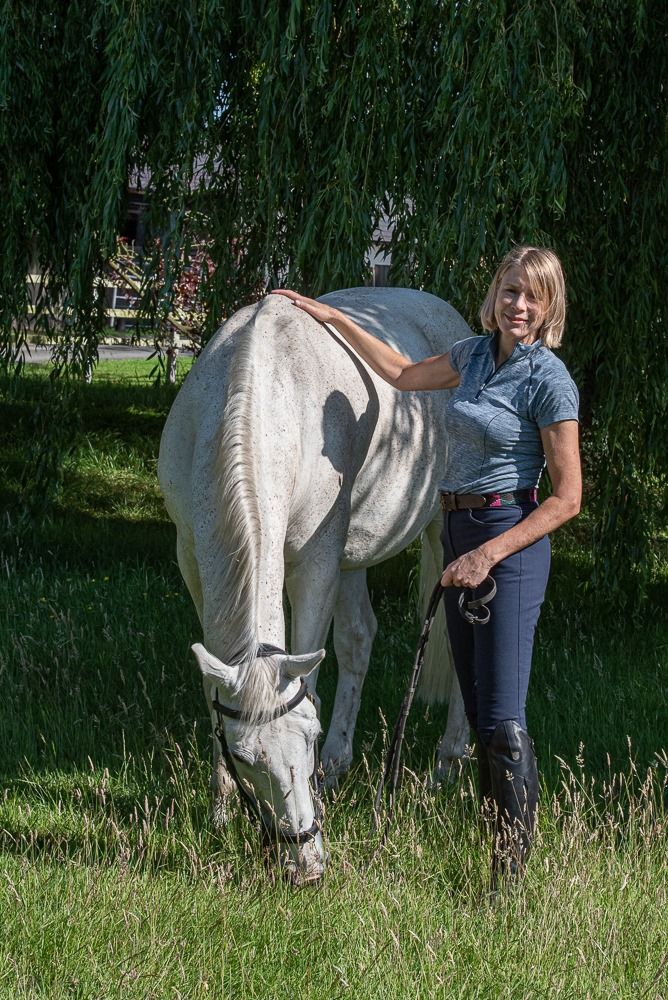
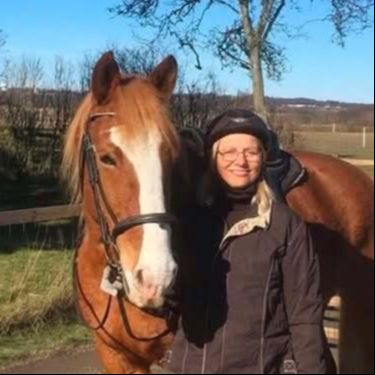
Course lead and feldenhorse creator
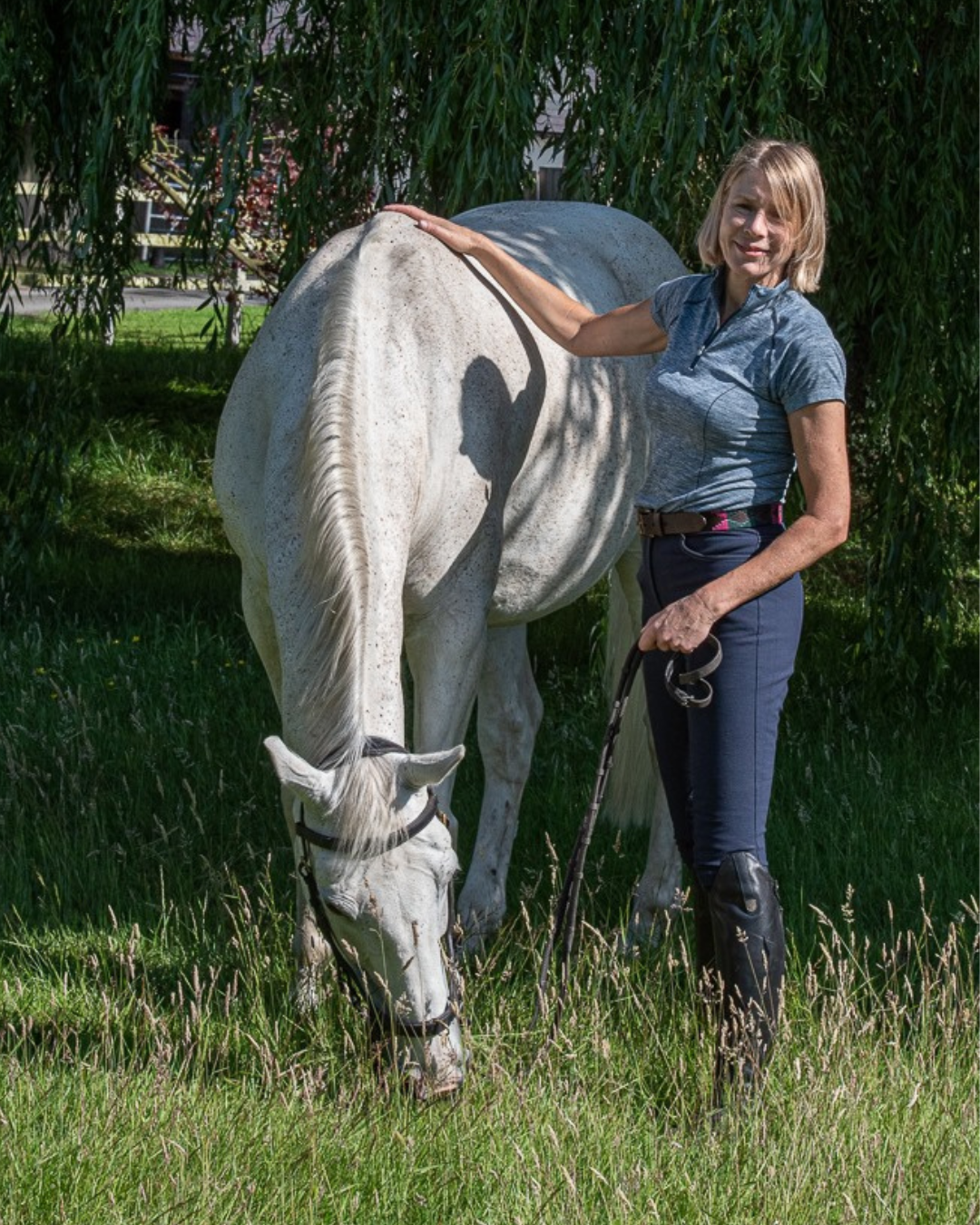
Catherine McCrum
And her horse, QQ
ACCREDITED FELDENKRAIS PRACTItiONER, GESTALT PYSCHOTHERAPIST, DRESSAGE RIDER
Catherine McCrum is an accredited Feldenkrais practitioner and has been teaching sport, fitness and movement since 1986 as first a ski instructor/coach and then as a Personal Trainer. She is also a Gestalt psychotherapist with a particular interest in working with developing awareness of how her clients embody their emotional and psychological patterns. Catherine assists in most of the Artistic Dressage Program courses by providing riders with Feldenkrais-based lessons to improve their body awareness, coordination, balance, and suppleness.
CO-INSTRUCTOR
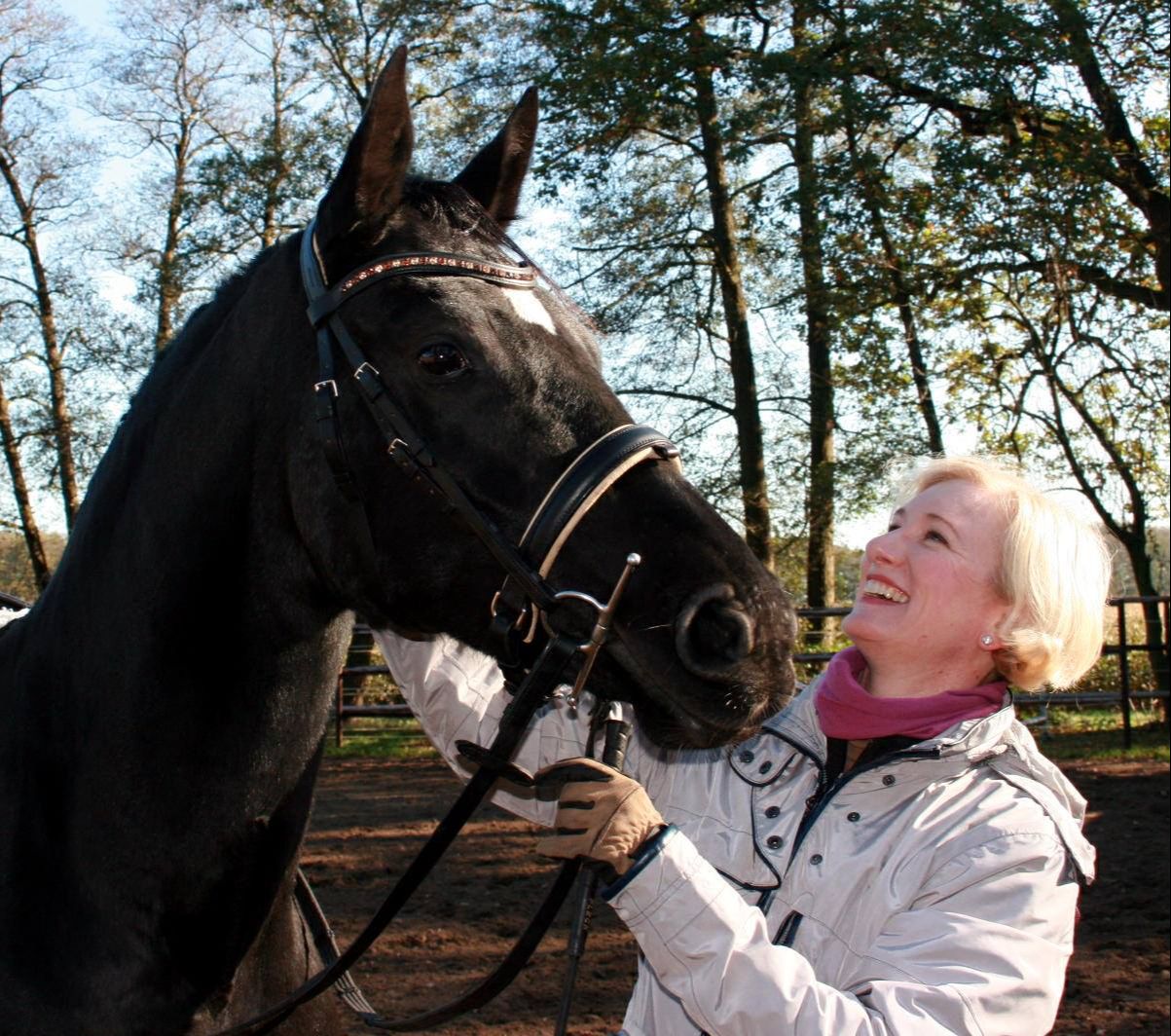
Charlotte Zetterberg
Charlotte is an accredited Feldenkrais Practitioner, riding instructor, and certified mindfulness teacher based in Sweden. She co-presents The Aware Rider Series with Catherine and teaches Feldenkrais on many of the Ritter courses. She has been an assistant on the Ritter Team since 2018 and is also the author of FeldenRide: an Introduction to Feldenkrais for Riders. Charlotte has been a collaborator on FeldenHorse since its earliest sessions with Ritter students.
SPECIAL GUEST AND CONTRIBUTING INSTRUCTOR
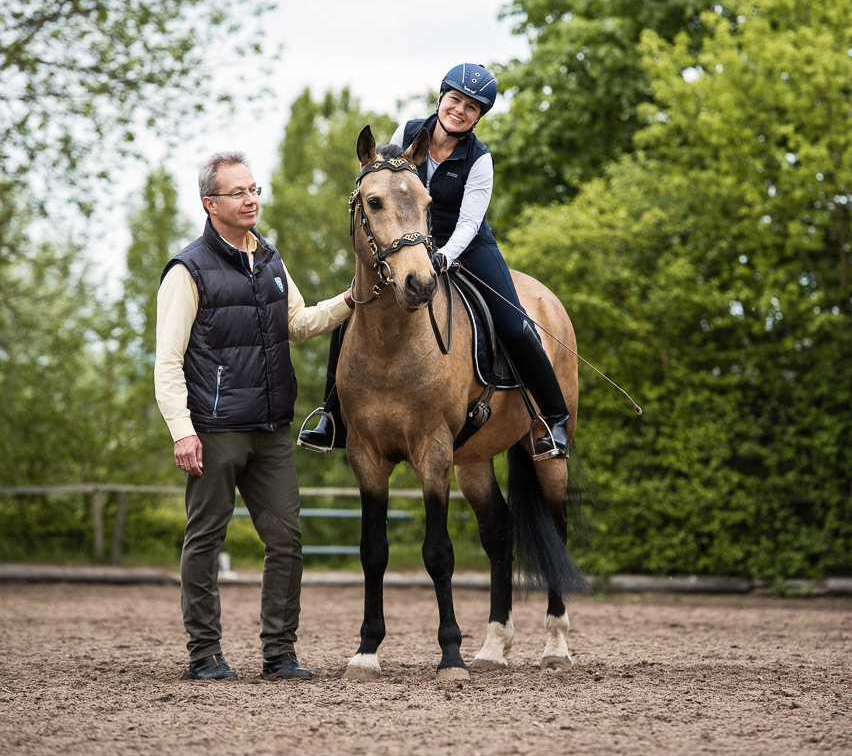
Yvonne Lübcke
Yvonne has been part of the Artistic Dressage online courses since 2018, and now teaches within the program as an assistant teacher. In her work, she focuses on health, communication, and mutual respect so both horse and human can feel more confident, comfortable, and connected. Over the years, she has studied energy work, Traditional Chinese Medicine, biomechanics, EMMETT (a fascia release technique) and equine communication, especially how horses express stress, discomfort, or pain. Understanding these signals helps her to look for the cause behind a behavior instead of simply correcting the horse, always trying to understand what the horse is trying to communicate.
ALSO JOINING US
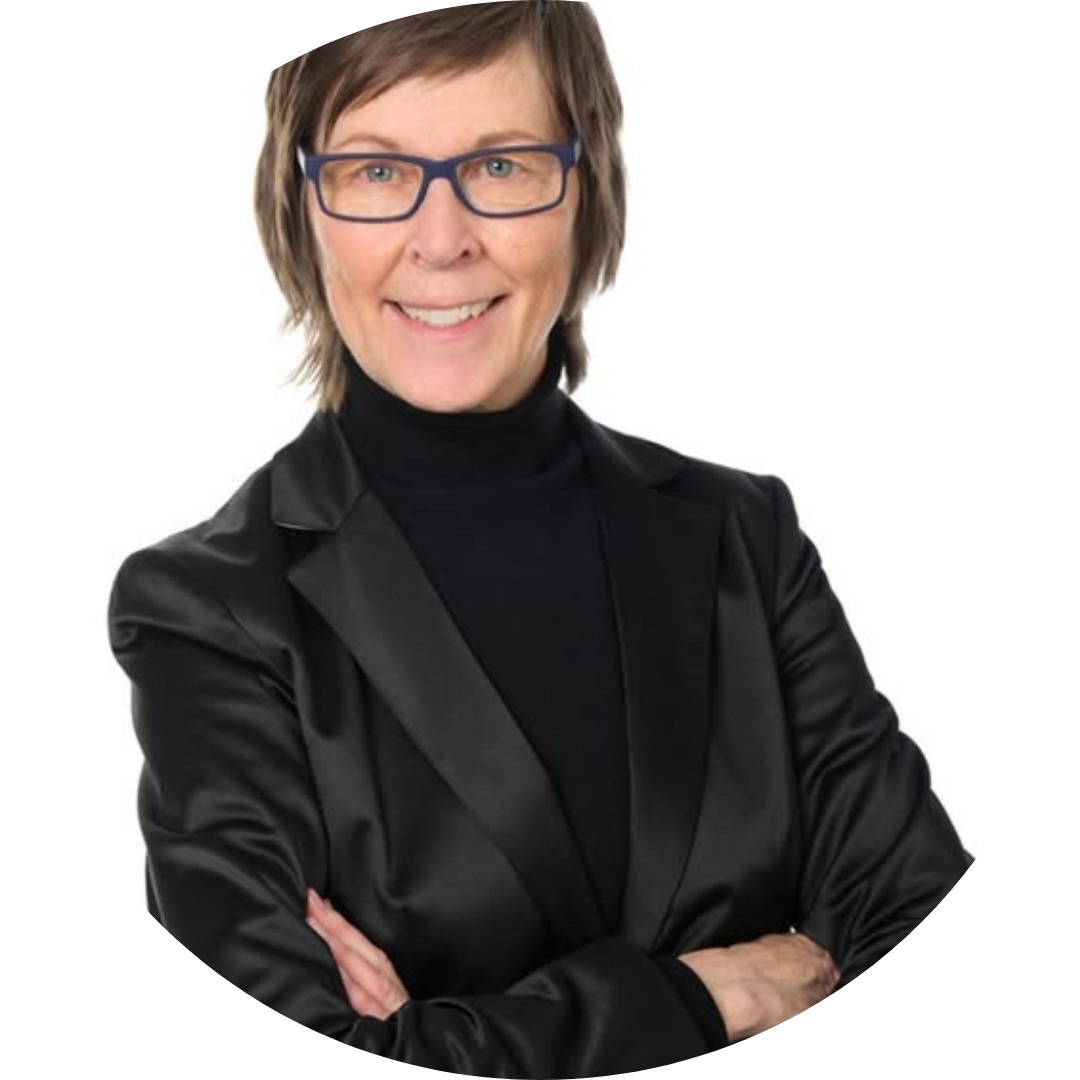
Thomas and Shana Ritter
Thomas (from Germany) and Shana (from USA), work on their farm of Lusitanos (and one Lipizzan as well as a cute pony) by the ocean in Portugal.
Together they run a program of online courses and programs which educate riders how to train their horses themselves, in accordance with classical principles and biomechanics.
Thomas is an International Clinician and author of two books (with a third book to be released later in 2026) and countless articles in many publications. Shana is a USDF Bronze and Silver Medalist. They have studied with Karl Mikolka, Egon von Neidorff, Arthur Kottas, Charles de Kunffy, Hubert Rohrer, Dorothee Baumann-Pellny, and Thomas Faltejsek.
Through the Artistic Dressage programmes they help riders all over the world to have better, happier relationships with their horses through correct, gymnastics and a thoughtful, heart-centered approach.
What our Students Say about FeldenHorse
"For the last few days I have been doing the FeldenHorse exercise that you demonstrated. I have done something similar that my horse osteo showed me, for a couple of years not, BUT, FeldenHorse is so much more effective and acceptable to my horse. He is really relaxing into it. Yesterday he even came to me and presented himself so I could move in and start. I notice since I have been doing this work that he seems to be more aware of his feet/ proprioception. I see this as huge progress. He also seems more acitve in the ridden work. Of course I do my Ritter exercises to bring awareness but sometimes the days feel like we are going back to square 1.
I wanted to share that the FeldenHorse exercise is effective and valuable. I do it like you recommended, small movements. The osteo moves I did were more pushing, and large, and I didn't get any feedback from my horse like I have with your exercise. Having the hand lightly on the breast bone you can really feel the ripple effect of the movement going into and out of the horse. Patiently and now more sensitively doing this has allowed finally a two way communication. Thank you! Looking forward to learning more."
Bella collins, GERMAny
"I had a very strange looking reaction from my horse and wished I had a picture of it. I was doing a simple wither rock towards the hollow side. We had already done it on his stiff side, which is normally his favourite side. I stopped the rocking after some softening and blinking and stepped away. All of a sudden my horse raised his head, pulled it all the way to his chest and continued raising it until the crest of his neck was almost vertical 😳 (so was his nose). As he slowly stretched up, I heard one crack pop after another starting from his lower neck going up all the way towards his poll! One of the boarders came right by after. She looked at my horse and asked if I had tranquilized him. I guess he had such an endorphin release, he sure was in a different world! I love the FeldenHorse work. My horse loves it when I put one hand on the ribs behind the shoulder and the other in the vicinity of the last 3 ribs. Especially on his still side. It normally only takes a few seconds before he starts to release. AND now he has finally started breathing in the trot and canter! Thank you Catherine for introducing us to this!
BIRGIT MACKENZIE, USA
"Who Loves Feldenhorse?
I and the horses absolutely love it. I was trimming Diesel's feet and he has an old stifle injury. He didn't feel comfortable to bring his hindleg forward so I could finish the trim.
I rocked his hip and withers and the ripple effect went all the way down his hind leg. I can hear popping. I've never seen rippling effect like that before. I was at this for a while. I didn't want to stop. I wanted to keep watching the rippling flowing down to his foot, but Diesel told me, I was done.
And then he was free to bring his leg forward and I was able to finish.
I haven't given him a body workout all winter. I'm so amazed by how simple this was and it freed up his hip and whole leg. Where ever it was blocked it was no longer blocked.
Thank you Catherine McCrum and Diesel really thanks you today!"
APRIL LEWIS, USA
Still Got Questions?
CAN YOU TELL ME MORE ABOUT FUNCTIONAL INTEGRATION?
WHAT IS THE SCHEDULE?
WILL I GET FEEDBACK AND SUPPORT?
I can’t attend all the live sessions. Will they be recorded?
Do I need a specific level of horse or rider experience to take this course?
Do I need special equipment or a specific setup?
What if I fall behind?
MY HORSE IS NON-RIDDEN. CAN I STILL PARTICIPATE?
How is this different from other bodywork programmes?
The FeldenHorse Course
A fully supported introduction to learning how to practise the Feldenkrais Method with your horse.
If you have ever struggled with your timing, balance, aids and bringing riding theory into reality - this is for you!
No prior experience with hands on work is needed - and there is no requirement to be able to ride high level dressage movements. We are going to be creating them from the ground, gently, thoughtfully and in collaboration with your horse.
- 8 Modules
- Targeted FeldenHorse lessons with video demos for your horse
- Feldenkrais Awareness Through Movement lessons for you as the practitioner
- Riding and in-hand demos to help you understand The Dressage Essentials
- Support through live group feedback sessions and the private community
- Life Time access to the Course Materials
The course starts July 17th 2026.
Will you be joining us?
Payment Plans and Currency options are available at checkout.
OUR GUARANTEE?
If you’re not 100% satisfied with the course, within 30 days, I will offer you a full refund, for any reason.
Take the full 30 days to explore the materials and experience FeldenHorse, and then make a decision using the information you have, rather than the information you don’t.

FeldenHorse gives you The Tools You Actually Need to Transform Your Horse’s Movement
You don’t need another gadget.
You don’t need to train and ride harder.
You don't even need to be a better rider.
Your horse needs your hands-on help to develop better foundational movements.
That’s what this course is.
If you’ve been wanting to support your horse’s posture, balance, and confidence from the ground up… this is your moment.